Prepare a sample that can support a reliable test
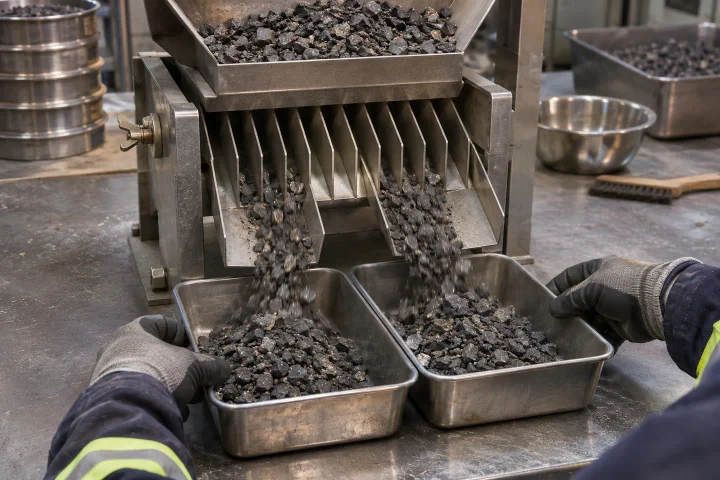
Mixing, splitting and preparation must preserve a representative sample. Differences between samples should not be mistaken for changes in process performance.
Jaw and roll crushers, rod mills and ball mills reduce the material to the size required by the next test. Preparation should suit the study objective; unnecessarily fine grinding can change the behaviour being measured.
- Jaw and roll crushing
- Rod and ball milling
- Homogenisation, splitting and representative subsamples
Measure the properties that determine the processing route
Wet and dry sizing, density measurements and mineralogical and microscopic studies help establish how the material can be processed. Comminution work-index tests provide a separate input to energy and equipment studies.
These measurements answer different questions. Work index supports grinding-duty estimates, while mineral distribution by size can identify liberation requirements and opportunities for early separation.
- Wet and dry sieve analysis and hydrocyclone classification
- Crushing and ball-mill work indices
- Bulk and true specific gravity
- Mineralogical and microscopic studies
Compare concentration methods
The valuable minerals, associated phases and particle sizes determine the test sequence. Gravity capabilities include shaking tables, jigs, spirals and an Erickson cone. Magnetic separation can be investigated at low and high intensity, in dry and wet conditions.
Laboratory and pilot flotation tests allow the preparation conditions, reagent programme and separation stages to be compared. Grade, recovery and product behaviour must be assessed together before a circuit is selected.
Leaching, thermal tests and solid–liquid separation
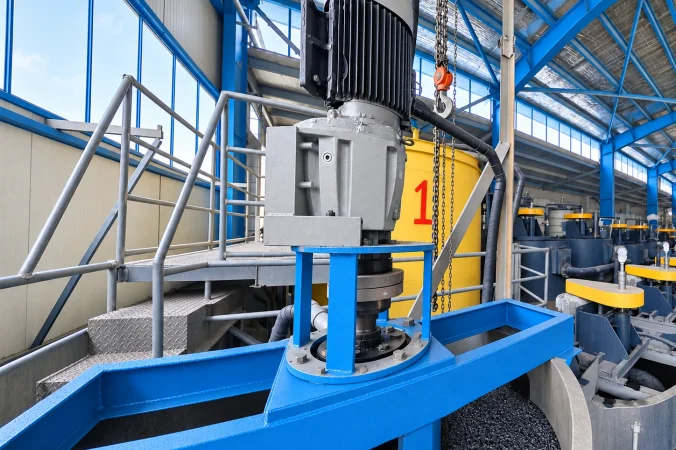
Hydrometallurgical capabilities include bottle-roll, diagnostic, acid and cyanide leaching, column tests and pilot-scale investigations. Agitated mixing and conditioning vessels support studies of contact between solids and solution.
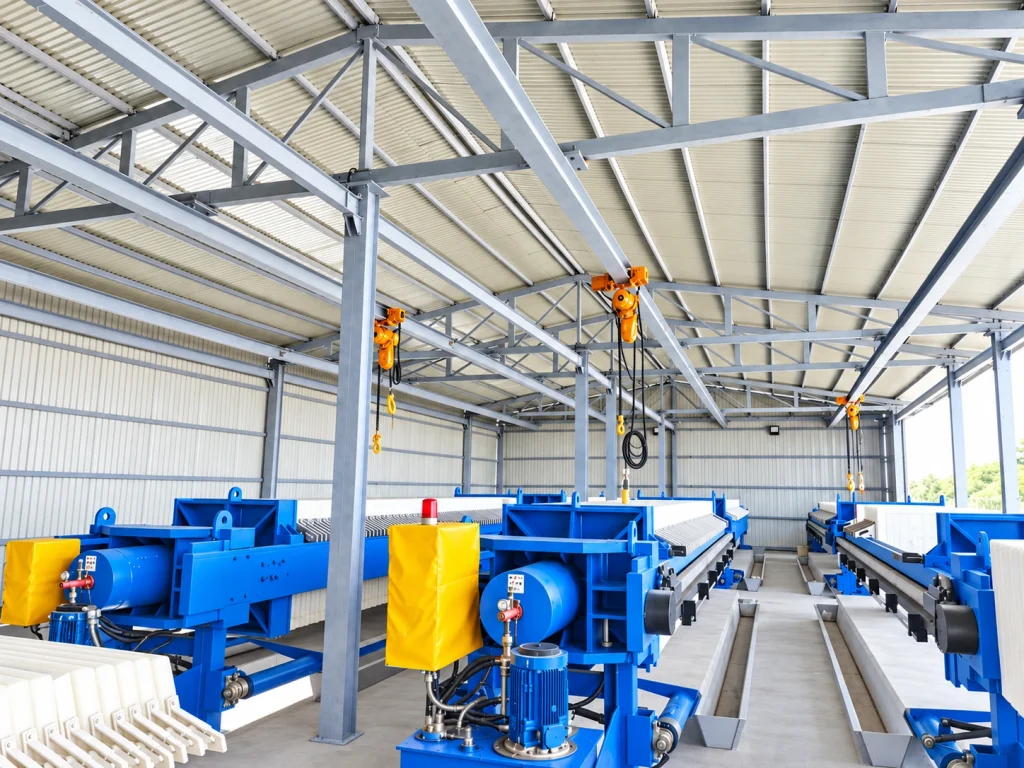
Box and tube furnaces are available for thermal tests. Settling and filtration studies examine slurry behaviour, solution separation and product dewatering. The selected tests should match the sample and the proposed processing route.
Define the programme before sending material
Send the material type, study objective, available assays and previous test results with your contact details. The required sample mass, packaging and schedule are determined after the programme is reviewed; they are not the same for every test.
A useful report records conditions, results and interpretation limits. Where an industrial design needs further confirmation, additional variability tests or pilot work can be identified as the next development step.
- An agreed technical question and test programme
- Recorded conditions and results
- Comparison of grade, recovery and consumptions
- Interpretation and recommendations for further work