
Is the ore suitable for leaching?
Oxide and sulphide copper minerals respond differently. Mineral species, acid-consuming gangue, clays and impurities must be characterized; total copper alone is not a design basis.
Bottle, column or agitated tests measure kinetics, final recovery, acid demand and size effects under representative contact conditions.
Leaching and solution management
Sulfuric acid transfers copper into pregnant leach solution. Permeability, particle size, irrigation, time and distribution affect recovery, while excess fines can restrict flow.
The water and acid balance must include evaporation, retained moisture, rainfall, wash water and recycle.
- Copper recovery and specific acid use
- PLS quality and impurities
- Permeability and solution distribution
- Water, acid and recycle balance
What solvent extraction does
SX transfers copper selectively from PLS into an organic phase, then strips it into a stronger electrolyte. Phase ratio, pH, mixing, separation and extractant choice control transfer and impurity carryover.
Organic entrainment into EW and aqueous contamination must be minimized.
Electrowinning and cathode quality
Direct current plates copper from electrolyte onto cathodes. Copper and acid concentration, temperature, current density, circulation and electrode alignment affect efficiency and deposit quality.
Upstream instability often appears as rough deposits, shorts or off-spec cathode.
Parandak copper project
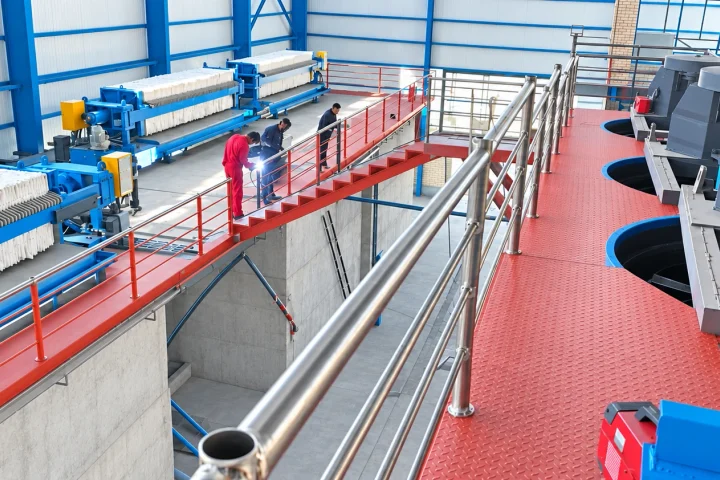
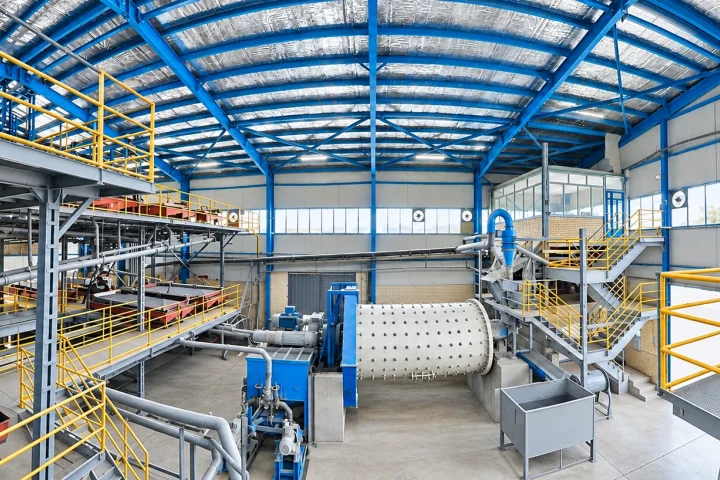
Published Zarfaravar project information describes an integrated crushing, leaching, SX and EW route for 300 tonnes per day of feed and a target of 700 tonnes of cathode per year.
The key lesson is data continuity from testwork through design and commissioning.
FAQ
Frequently asked questions
What is the difference between SX and EW?
SX purifies and concentrates copper in electrolyte; EW uses electricity to plate that copper as metal cathode.
What controls acid consumption?
Copper mineralogy, acid-consuming gangue, particle size, time and chemistry, measured on representative samples.
Is every copper ore suitable for SX/EW?
No. Solubility, recovery, acid demand, impurities and project economics determine suitability.
REFERENCES
Technical sources
Sources are provided for further technical reading. Final engineering decisions require project-specific testwork.