
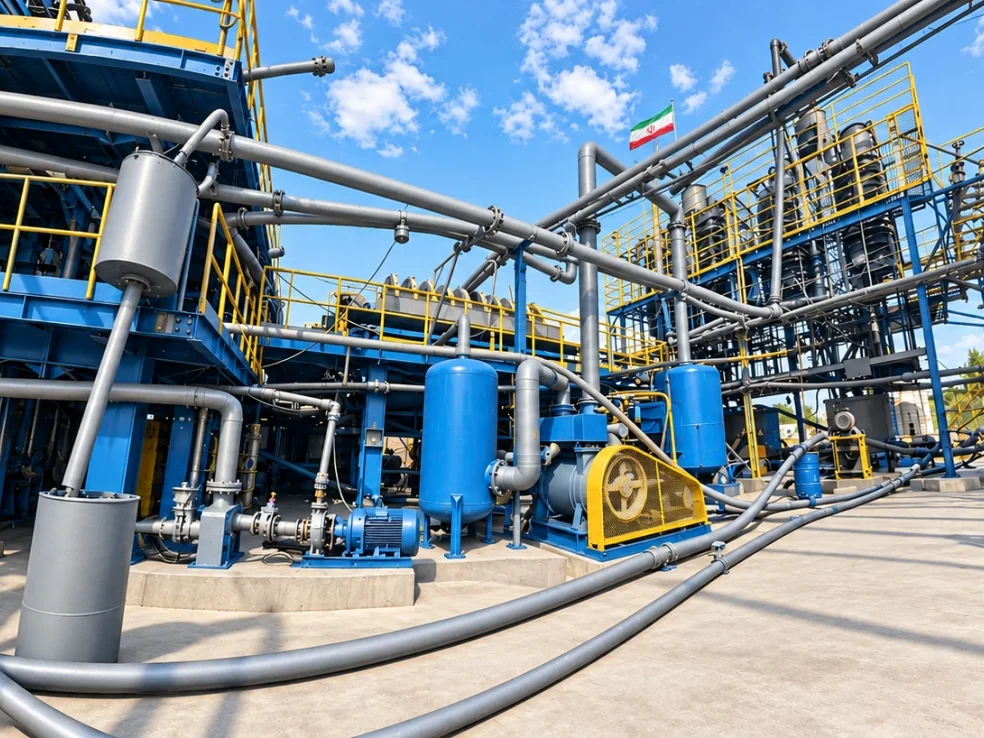
Design starts with the ore, not the equipment
A representative sample and a credible view of orebody variability form the design basis. Chemistry alone is not enough: mineralogy, liberation, size distribution, hardness and deleterious phases determine which routes deserve testing.
Each test should answer an engineering question. Comminution, flotation, gravity or magnetic separation, leaching and dewatering data must feed design criteria, mass balances, energy estimates and equipment duty.
- Define grade, hardness and mineralogical variability
- Select representative samples for each ore type
- Write a test program with measurable decision criteria
From conceptual flowsheet to process design criteria
Alternative routes are compared on recovery, product quality, operability, water and reagent demand, maintainability and cost. The highest bench recovery is not automatically the best industrial solution.
The selected route is documented in process design criteria, a mass and water balance, process flow diagrams and a major equipment list. Assumptions and operating boundaries must stay visible.
Concept, basic and detailed engineering
Concept design compares options. Basic engineering fixes plant scale, major duties, utilities, layout and control philosophy. Detailed engineering turns that basis into coordinated documents for procurement, fabrication and construction.
Process, mechanical, piping, structural, electrical and instrumentation interfaces must be controlled. A small equipment elevation change can affect pumps, steelwork, piping and maintenance access.
- PFDs, balances and design criteria
- P&IDs, datasheets and equipment specifications
- Layouts, 3D model and discipline drawings
- Line, load and long-lead equipment lists
Reducing scale-up and commissioning risk
Pilot testing is valuable for complex ores, unfamiliar technology and tightly coupled circuits. It exposes recycle effects, local-water behavior, impurity build-up and feed variability before full capital is committed.
Constructability, maintainability, sampling, control and safe start-up or shutdown scenarios should be reviewed before documents are issued for construction.
What makes a design package dependable?
A dependable package preserves traceability from laboratory result to design value and equipment duty. Each critical figure needs a data source and confidence basis.
Zarfaravar integrates process studies, basic and detailed engineering and construction support so knowledge generated from the sample remains intact through procurement and delivery.
FAQ
Frequently asked questions
What information is needed to start plant design?
Ore type, available assays, target capacity, variability data, project location and water or energy constraints. If data is incomplete, sampling and testwork come first.
Is pilot testing always required?
No. It is most valuable for complex ores, unfamiliar processes, unusual water chemistry or uncertain scale-up.
How is process design different from equipment selection?
Process design defines duties, balances and operating conditions. Equipment selection is an output of that work, not its starting point.
REFERENCES
Technical sources
Sources are provided for further technical reading. Final engineering decisions require project-specific testwork.